Fantino Bianchi
In the grand, unpredictable circus of technology, few companies can match Microsoft’s creativity when it comes to making and unmaking its own products. The latest, hilarious chapter in this saga stars Microsoft Ink Canvas (Preview), the new app designed for freehand writing, sketching, and visual collaboration. Everything is perfect, except for one detail that hasn’t escaped the notice of Windows ecosystem veterans: the feeling of an extremely long déjà vu.
After all, the community’s memory is hard to fool. Only recently, Microsoft seemed to have decided to shelve, scale back, or effectively “kill” Microsoft Whiteboard, the long-standing tool created for interactive whiteboards that had accompanied meetings and brainstorming sessions for millions of users. An application that, through its ups and downs, had found its place before gradually being pushed aside, leaving a bitter taste in the mouths of those who had invested time and workflows in that platform.
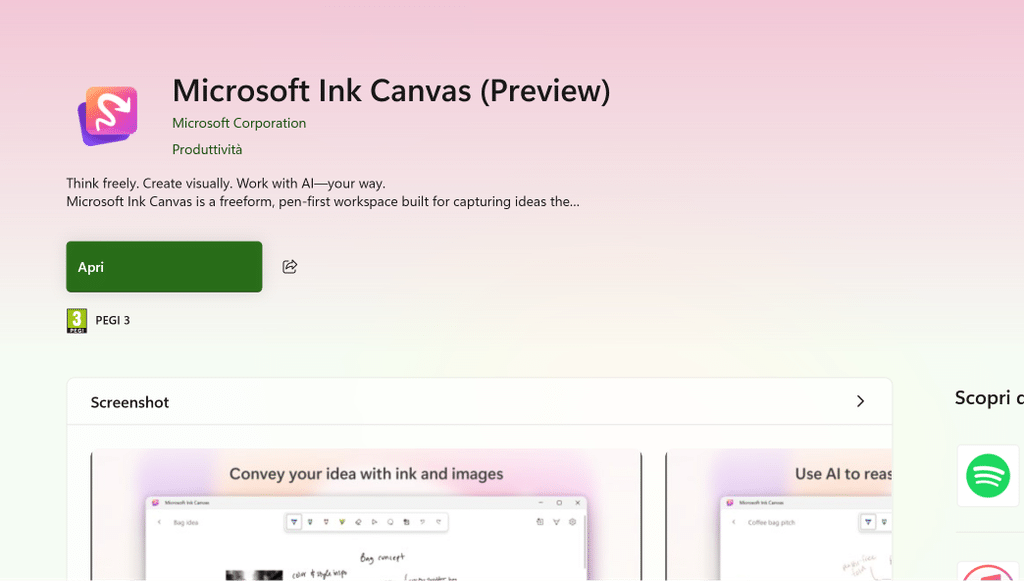
And yet, after some time, the phoenix rises from its ashes, but in disguise. Microsoft Ink Canvas (Preview) is presented to the public as a breath of fresh air, sporting a brand-new logo and a slightly revised name. In practice, however, very little has changed: we’re looking at the same digital whiteboard philosophy, repackaged in more modern clothing but with the exact same ambitions.

This move inevitably reignites debate about the Redmond company’s product strategy. Why retire an established brand—however much it may need maintenance or updates—only to serve up the same old reheated soup under a rebrand? For users and professionals, this dynamic is as frustrating as it is predictable: yet another dance of labels that forces them to readjust to similar, if not identical, interfaces, perhaps losing the history of their old apps in the process.
The costs of this stop-start strategy are borne not only by aesthetic consistency and marketing, but above all by the operational continuity of businesses, schools, and professionals. Getting a team used to a collaboration tool, halting its development or making its future uncertain, and then forcing everyone to migrate to a new app that does exactly the same things represents a significant hidden cost in terms of training and adaptation. Once again, Microsoft seems more focused on a superficial facelift than on building a stable, long-term ecosystem, leaving the crucial question open: how long will this “Preview” last before the next inevitable change of direction?
Now that Microsoft Ink Canvas (Preview) is taking its first steps, the hope is that this new christening will at least bring lasting stability with it, averting yet another premature digital funeral of the kind the Redmond giant has sadly accustomed us to.